Why President Trump should be disinvited

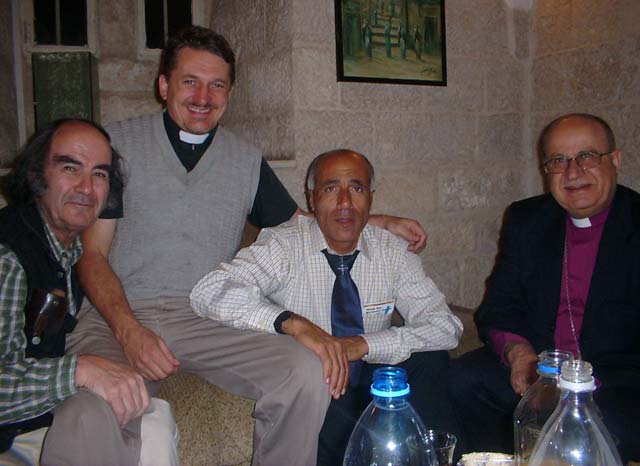
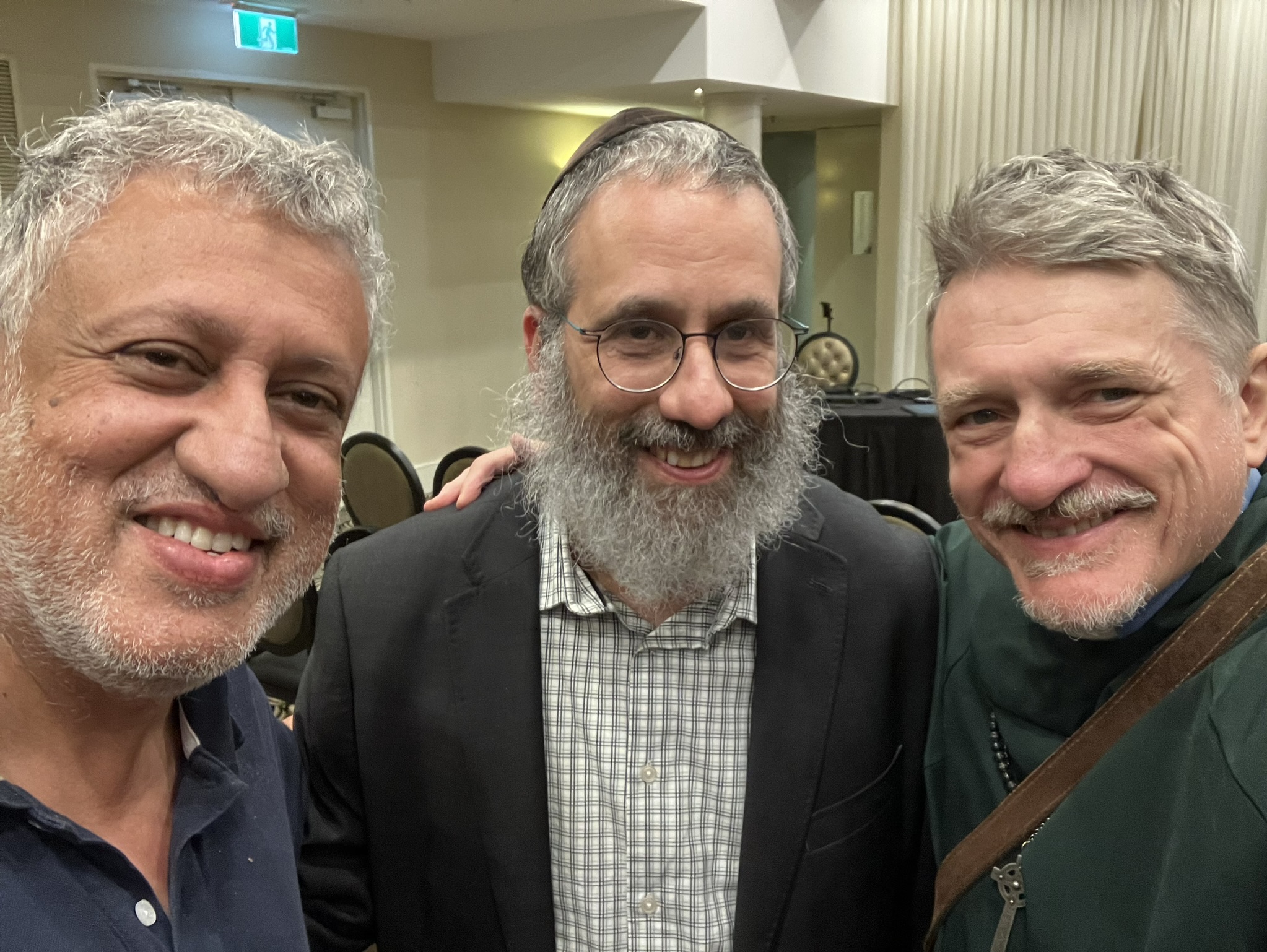
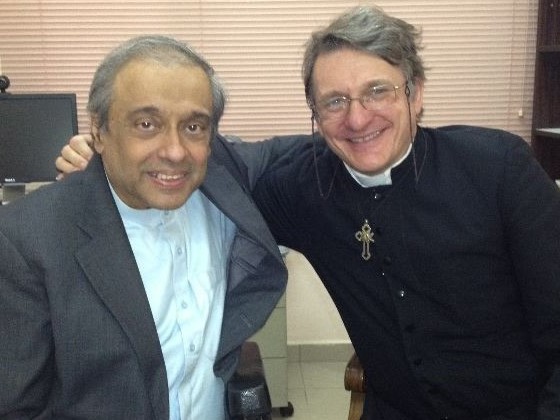
I haven’t seen my friend, Dr Chandra Muzaffar, in person since the pic below was taken in 2014. Even so, we stay in touch and I had the privilege of having him join us on our ‘Palestine and Global Peace’ webinar last year.

Dr Muzaffar continues to pour his heart into the work of justice and peace, and this latest contribution – urging Prime Minister Anwar Ibrahim to formally disinvite President Trump to the upcoming ASEAN Summit reminds me that he is still on the cutting-edge.

God bless you and strengthen you, dear brother. You have extended Divine love and justice across the globe for so many years! If only more would listen to your wisdom.

Father Dave with Dr Chandra Muzaffar in 2014

Father Dave with Dr Chandra Muzaffar in 2014

DISINVITE TRUMP

3 October 2025.

Why President Trump should be disinvited.

The International Movement for a Just World (JUST) joins a whole host of Malaysian groups and individuals in appealing to Prime Minister Anwar Ibrahim to formally disinvite President Trump to the forthcoming ASEAN Summit to be held in Kuala Lumpur from October 26th 2025 to October 28th 2025.

JUST understands the difficult situation Prime Minister Anwar is in. Trump as the current US president, together with some other world leaders, has been invited by ASEAN, not Malaysia, to the Summit. Malaysia is chairing the Summit which is why the Prime Minister of Malaysia is playing the role he has to play.

Nonetheless, president Trump has been so deeply immersed in the on-going genocide of the Palestinian people that any positive gesture towards him, however symbolic, would be viewed with utter repugnance by a huge segment of the Malaysian nation. There are at least three reasons why such repugnance may be justified.

One, the US leadership is not just complicit in the genocide which has already claimed in modest terms at least 66,000 Palestinian lives in Gaza. Through its military, financial and diplomatic involvement in the genocide, the US government under Trump has been one of two principal authors of the brutal, barbaric massacre since early October 2023 (The other is of course Israel). To put it differently, without  Trump’s involvement, there would have been no genocide. It is significant that of the 66,000 lives lost, 20,000 have been children. Should Malaysia play host to such a human being with such a cruel and callous record?

Two, in this regard, Trump has not once admonished in public the Israeli government or Prime Minister Benjamin Netanyahu for its systematic denial of the most basic rights of the Palestinian people. This includes in the context of the current genocide, their right to food, to shelter, to healthcare, indeed, to life itself. A leader with so little compassion should not be welcomed anywhere in the world!

Three, leaving aside basic rights, Trump, unlike a couple of his predecessors, appears to be totally ignorant of the Palestinian struggle for justice. He has no notion of their deep link to their ancestral land, of their culture that predates the arrival of Judaism, Christianity and Islam to the region, of how Jewish, Christian and Muslim communities interacted with one another in the past, and how a distinct Palestinian identity evolved over time. Why should Kuala Lumpur, why should ASEAN, embrace such an ignorant leader who at the same time doesn’t even have an iota of empathy for the Palestinian cause?

For all these and numerous other reasons, JUST would urge Prime Minister Anwar to send Trump a polite and dignified letter of disinvitation to the ASEAN Summit.

Dr Chandra Muzaffar,
President, International Movement for a Just World (JUST)

Posted in Social Justice | Tagged , , , , , | Leave a comment

Echoes of Peace for Palestine

My address at the ‘Echoes of Peace’ vigil for Palestine, given on September 27th, 2025 in Parramatta. The text below the video is of the speech as originally written. Not having a lectern on the night, the speech delivered was somewhat truncated.

Echoes of Peace – A Vigil for Palestine
September 27th, 6.30 pm @119 Macquarie St, Parramatta

“But he said to me, ‘My grace is sufficient for you, for my power is made perfect in weakness.’”— 2 Corinthians 12:9

This is Paul talking about how he copes with stress. He’s talking specifically about what he calls his “thorn in the flesh,” – a pain that he always carried with him and that he was never able to resolve. We don’t know exactly what Paul’s ‘thorn in the flesh’ was, but we know what ours is. It is Palestine!

We carry the pain of Palestine in our hearts, and it is a pain that does not go away. We sense a connection to our dear sisters and brothers across Gaza and the West Bank and, to quote Saint Paul again: “when one member suffers, all the members suffer with it.” (Corinthians 12:26). However remotely, we are connected to their pain.

We are wounded by their suffering, yet we must remain strong because we must fight on, so we draw on that other great spiritual resource that God provides – hope.

“Suffering produces perseverance; perseverance, character; and character, hope.”, says the same Saint Paul (Romans 5:3–5), and sometimes indeed suffering will produce hope in and of itself. Even so, let me tell you what gives me hope: it’s seeing the world slowly pivoting towards Palestine!

Let me name just a few signs of strength in the face of despair:

I feel hope when I listen to the volunteer doctors of Gaza

I watched a video this week of two young Australian nurses who have been working in the only hospital left in Gaza. Their stories were horrific, and they had been working in unimaginable conditions—without electricity, without medicine, and without sleep. They operate by flashlight, they treat children with bare hands, and they mourn those they lose while they save others. Their resilience is not just heroic—it’s holy. They remind us that compassion is more powerful than cruelty.

I feel hope when I see that the flotilla is still sailing!

Ordinary citizens from around the world have risked their lives to break the Gaza blockade, sailing in solidarity and defiance! These boats carry more than aid—they carry courage. They say to the world: We have not forgotten Gaza. And even when they are intercepted and harassed and targeted, they continue!

I feel hope when I look back on the Sydney Harbour Bridge march!

Just weeks ago, hundreds of thousands of us marched across the Sydney Harbour Bridge, waving Palestinian flags, chanting for justice, in the pouring rain! It was a cry of solidarity that reached the Heavens! It was a moment of unity for Christians, Muslims, Jews, and secular Australians, walking side by side. Can any of us even look at the Harbour Bridge any more without thinking ‘there all of Australia stood in solidarity with Palestine!’

I feel hope when I look around the globe and see the world shifting in compassion towards Palestine

From London to Jakarta, from Cape Town to São Paulo, people are rising up. Students are staging walkouts. Artists are painting murals. Faith leaders are speaking out. In Ireland, in South Africa, in Indonesian, where they are promising peace-keeping troops, and even in this country where the Australian government is finally going to recognise Palestine. In big ways and in small, there is no denying that the world is waking up!

“The arc of history is long,” said Martin Luther King, “but it bends towards justice.”

And we can see where that arc is leading us. We can see that arc of history bending towards Palestine.

The world is changing.

  • It is changing in the United Nations, where more countries are voting in favour of Palestinian rights than ever before.
  • It is changing in Chile, in Colombia, and in Bolivia as they cut diplomatic ties over the atrocities.
  • It is changing in the hearts of ordinary people, something is shifting. The veil is lifting. The propaganda is cracking. And the truth is shining through.

So yes, we feel weak, we feel overwhelmed, and we feel broken-hearted, and yet we remember Saint Paul’s words:

“My grace is sufficient for you, for my power is made perfect in weakness.”

Our weakness is not a flaw—it is a doorway. It is the place where grace enters. It is the place where solidarity is born.

We are not strong because we are unshakable. We are strong because we keep showing up.
We are strong because we cry and still speak.
We are strong because we mourn and still march.
We are strong because we believe—in justice, in dignity, in peace.

And we believe that Palestine will rise.
Not just out of the rubble, but into freedom.
Not just above their grief, but into joy.
Not just from despair, but into hope.

So let us carry that hope.
Let us echo that peace.
Let us be strong in the face of the pain.

Amen.

Posted in Social Justice | Tagged , , , , | Leave a comment

Spiritual Dialogues: Tony Robbins meets the Author of Hebrews

Hebrews vs. Tony Robbins

Last week my reflection on Colossians 3:3 led me to compare the writings of Saint Paul to the teachings of the Maharishi Yogi, and I asked AI to generate an imaginary conversation between the two.

This week I’m working on Hebrews 11, and I thought I’d try to create a similar imaginary encounter between the author of the letter and self-help guru Tony Robbins.

Let me know what you think, and to get my angle on Robbins’ teachings, see my newsletter.

Spiritual Dialogues: Tony Robbins meets the Author of Hebrews

Tony Robbins:
Your chapter—Hebrews 11—is powerful. It’s like the original motivational seminar. But tell me, how do we turn that kind of faith into real-world results?

Author of Hebrews:
Faith is the assurance of things hoped for, the conviction of things not seen. It’s not just belief—it’s trust in the unseen, anchored in God’s promises.

Tony Robbins:
I teach that belief shapes reality. You’ve got to see it, feel it, act on it. Is that what Noah did?

Author of Hebrews:
Exactly. By faith, Noah, warned about things not yet seen, built an ark to save his family. His action was rooted in trust, not in evidence.

Tony Robbins:
So faith drives action. That’s what I say too—take massive action! But your heroes weren’t chasing personal success. They were responding to a divine call.

Author of Hebrews:
Yes. Abraham left everything, not knowing where he was going. Moses chose suffering with his people over the pleasures of Egypt. Faith isn’t self-centred—it’s obedient.

Tony Robbins:
That’s a shift. I talk about modeling excellence, but your models were driven by something beyond themselves.

Author of Hebrews:
They looked forward to a better country—a heavenly one. Their lives were testimonies, not trophies.

Tony Robbins:
So you’re saying faith isn’t just about achieving goals—it’s about aligning with a higher purpose?

Author of Hebrews:
Precisely. These people didn’t receive all that was promised, but they saw it from afar and welcomed it. Faith is living in light of eternity.

Tony Robbins:
I say success leaves clues. You say faith leaves a legacy.

Author of Hebrews:
And that legacy speaks. “Though they are dead, they still speak.” Their lives echo through time.

Tony Robbins:
I’m inspired. Maybe I’ve been preaching faith all along—just without naming it.

Author of Hebrews:
Then let your message point beyond the self. Faith begins where self-reliance ends.

Faith is Trust made eternal

Posted in Interfaith, Sermons: Epistles | Tagged , , , , , , | Leave a comment

Spiritual Dialogues: Maharishi Yogi meets Saint Paul

Saint Paul meets Maharishi Mahesh Yogi

I was penning some thoughts on Colossians 3:3 – “for you have died, and your life is hidden with Christ in God” – and reflecting on Saint Paul’s mystical imagery and language. It makes Paul sound like a guru, yet I just couldn’t see Paul sitting cross-legged, deep in Transcendental Meditation.

This led me to get into a conversation with AI, comparing the writings and teaching of Saint Paul with Maharishi Mahesh Yogi – the man who brought TM to the West. I asked AI to create an imaginary dialogue between the two men. I thought it was pretty good. Let me know what you think.

Dave


Spiritual Dialogues: Maharishi Mahesh Yogi meets Saint Paul

Paul: Peace to you, Maharishi. I see a stillness about you that is not unfamiliar, yet it draws from a different source.

Maharishi: And I see in you a fire—a devotion that burns even through suffering. Tell me, Paul, why do you embrace pain so willingly?

Paul: I do not seek pain, but I do not flee from it. “I rejoice in my sufferings for your sake,” I once wrote. In suffering, I enter into Christ’s crucified body, that I might also share in His resurrection.

Maharishi: A beautiful devotion, though one I do not echo. Pain, like thought, is something to transcend. Through Transcendental Meditation, we release from suffering and merge with the field of bliss consciousness.

Paul: Yet does not bliss risk becoming self-enclosed? My joy is not solitary—it is bound up in the body of Christ, in the redemption of others. In my weakness, I find strength not in escape, but in communion.

Maharishi: Communion may come in silence too. When the boundaries of self dissolve, we discover our unity with all that is. No need for crucifixion—only awakening.

Paul: But I am not seeking to dissolve—I am seeking transformation. The resurrection affirms the body, even glorifies it. I could never call suffering meaningless, for even Christ entered into it for love’s sake.

Maharishi: Love I understand. Bliss is love fulfilled. Yet your love is clothed in burden; mine, in release. You seek salvation through a man nailed to a cross. I seek it through the eternal self untouched by death.

Paul: And I through the eternal Christ who passed through death, conquering it not by avoidance, but by sacrifice. In Him, all things are made new—not by meditation, but by incarnation.

Maharishi: Then we walk different paths, friend. But perhaps in the stillness between words, and the silence beneath suffering, we touch the same mystery.

Paul: Perhaps. For now, I preach Christ crucified. And I pray even your silence might one day echo His name.


To see the text and video of my reflection on Colossians 2:3, see my blog post – “Set your mind on the things that are above

Posted in Interfaith, Sermons: Epistles | Tagged , , , , , , , | Leave a comment

Enough is Enough – an Appeal to the UN regarding Israeli Military Aggression against Iran

The following letter was penned by Professor Saied Reza Ameli of IRAN and was submitted with 135 signatories, including many of my prominent activist friends, such as Miko Peled (52) and Stephen Sizer (54). I was also privileged to be asked (no.99).

Letter to the UN regarding attacks on Iran

To:

His Excellency Mr. António Guterres, Secretary-General of the United Nations

Her Excellency Ms. Audrey Azoulay, Director-General of UNESCO

Subject: Urgent Appeal for Action Regarding Israeli Regime’s Unlawful Military Aggression Against Iran

Your Excellencies,

The undersigned submits this formal protest regarding the Israeli regime’s sustained unlawful aggressions against Iran since 13 June 2025, constituting severe breaches of international law under the UN Charter. These systematic attacks endanger regional stability, civilian lives, ecological integrity, and global cultural heritage, escalating beyond mere geopolitical conflict into an international existential threat. The deliberate targeting of civilians, residential areas, and sovereign institutions undermines the international legal order, risking irreversible catastrophe. The situation demands urgent intervention before diplomatic and mitigative capacities are exhausted. It is earnestly urged that this appeal be regarded not as a matter of routine procedure, but as a solemn and final urgent call to action—one that necessitates the immediate and coordinated mobilisation of all juridical, diplomatic, and institutional capacities, in order to prevent the onset of an irreversible systemic disintegration of international institutional legitimacy and credibility.

Verified data confirm a systematic and deliberate aggression targeting Iran’s civilian population and critical infrastructure. This is not incidental warfare, but a calculated strategy designed to dismantle the functional pillars of civilian life—most gravely in the domains of healthcare, education, scientific advancement, energy, and cultural preservation.

To date, the Israeli regime’s aggressions across Iran have killed over 415 people and injured around 1,550, with civilians accounting for 90% of the casualties. The majority of the dead are women and children, and the attacks have also intentionally targeted prominent scientists and senior military officials. Strikes on residential zones, hospitals, research centres, and religious sites illustrate a pattern of indiscriminate violence carried out in the absence of legitimate military imperative.

As of the moment of this appeal, the Israeli regime’s forces have carried out 125 strikes across residential areas, civilian, governmental, scientific, industrial, and military sectors. The wide geographic scope and repeated attacks indicate a coordinated escalation that constitutes a grave violation of the principles of “distinction” and “proportionality” under international humanitarian law.

Material losses are extensive as well. Immediate physical damage is estimated at $3.2–4.9 billion, with long-term economic losses surpassing $10 billion due to infrastructure collapse and oil revenue decline. The destruction of key installations—including airports, water treatment facilities, refineries, and nuclear sites—has paralysed essential services and public life.

The Israeli regime’s sustained pattern of aggression observed constitutes a series of grave breaches—not only of the Charter of the United Nations but also of international humanitarian law, the laws of armed conflict, and universally recognised human rights norms. These actions have constituted a serious violation of the principle of national sovereignty and have had catastrophic consequences for civilian life, infrastructure, and international stability.

  • Under Article 2(4) of the UN Charter, such use of force is prohibited unless authorised by the Security Council or justified under Article 51 as self-defence. The acts of the Israeli regime meet the criteria of aggression as defined in UN General Assembly Resolution 3314 (1975), and are further criminalised under the Rome Statute and the 2010 Convention on the Crime of Aggression.
    .
  • Strikes have consistently breached International Humanitarian Law (IHL), especially the principle of distinction codified in Article 48 of Additional Protocol I (1977) and Customary IHL Rule 1. Attacks on civilian homes, hospitals, schools, and cultural sites violate Articles 51(2) and 52(2) of the Protocol, as well as Rule 14, which prohibits excessive incidental harm. Evidence suggests repeated breaches of Rule 103, prohibiting collective punishment.
    .
  • The principle of proportionality under Article 51(5)(b) of Additional Protocol I has also been violated. Strikes on critical infrastructure such as water systems and power grids have produced humanitarian crises disproportionate to any military gain. This has led to blackouts, water shortages, and serious medical system disruption, exceeding acceptable collateral damage under IHL.
    .
  • Attacks on nuclear and scientific facilities threaten global security and contravene the IAEA Safeguards Agreements under the NPT, as well as IAEA General Conference Resolutions GC(XXIX)/RES/444 and GC(XXXIV)/RES/533. Such actions violate Article 1 of the 1994 Convention on Nuclear Safety and parallel earlier condemned attacks, notably UN Security Council Resolution 487 (1981) regarding Iraq’s Osirak reactor.
    .
  • Targeted assassinations of scientists and officials constitute extrajudicial killings, violating Article 3 of the Universal Declaration of Human Rights and qualifying as war crimes under the Rome Statute, particularly where due process is absent.
    .
  • Strikes on sites containing dangerous forces—such as nuclear reactors and chemical facilities—violate Article 56 of Additional Protocol I and Customary IHL Rule 42, which mandate precautions to prevent widespread civilian harm and environmental disaster.
    .
  • The destruction of universities, cultural heritage, and research institutions breaches Article 15(1)(b) of the International Covenant on Economic, Social and Cultural Rights (1966), directly undermining national development and global cultural and scientific heritage.

In view of the grave and escalating violations set out above, and in accordance with the legal and moral responsibilities vested in the bodies under your jurisdiction, we urge the immediate implementation of the following measures to uphold international law and avert irreversible harm to global order and the international society:

  1. a formal and unequivocal condemnation of the Israeli regime’s strikes is required, recognising them as breaches of international law, including but not limited to international humanitarian law, human rights norms, and nuclear safety law, and as an affront to the sovereignty of the Islamic Republic of Iran and international peace and security.
    .
  2. we call for the urgent convening of an emergency session of the United Nations Security Council and/or General Assembly, under the Uniting for Peace framework, to address the legal and geopolitical consequences of the Israeli regime’s actions.
    .
  3. an impartial international fact-finding mission should be established under UN auspices, with input from relevant Special Rapporteurs, to investigate the legality and humanitarian impact of the strikes.
    .
  4. the aggressions must be referred to the International Criminal Court for preliminary examination under Articles 7 and 8 of the Rome Statute.
    .
  5. a binding resolution must be adopted demanding cessation of hostilities, reparations, and guarantees of non-repetition.
    .
  6. UNESCO must dispatch experts to assess damage to educational, scientific, and cultural institutions.
    .
  7. international safeguards must be issued to protect nuclear facilities from military attack.

This is not a national crisis, nor a regional matter but a grave assault on the legal and moral order underpinning our universal, shared foundations of international and civilisational law. Silence and inaction now ushers in an irreversible deterioration of the international order, endangering peace, knowledge, and the survival of humanity itself — a reality that has united the noble people of Iran in steadfast support for their nation and in profound moral revulsion toward the Zionist regime.

Now is the moment to contain it—decisively, lawfully, and without delay.

We urge Your Excellencies to act.

Respectfully submitted,

21 June 2025

Professor Saied Reza Ameli (IRAN)

Head of the UNESCO Chair on Cyberspace and Culture: Dual-spacisation of the World (UCCC)

(UNESCO No. 2015IR1107), Dean of Faculty of Studies – University of Tehran

Signatories:

  1. Seyed Mohammad Marandi (IRAN)

Professor at the University of Tehran

2. Massoud Shadjareh (IRAN)

Chair of Islamic Human Rights Commission-London, consultative status at the UN Department of Economic and Social Affairs

3.  Scott Ritter (USA)

former UN Special Commission weapons inspector

4.  Norman Finkelstein (USA)

Political Scientist and son of Holocaust-survivor parents

5. Richard Falk (USA)

Professor Emeritus of International Law at Princeton University and former UN Special Rapporteur

  1. Jan Kavan (Czech)

President of the UN General Assembly 2002-2003, former Minister of Foreign Affairs

  1. Yanis Varoufakis (Greece)

Former Minister of Finance, economist and professor at the University of London, the University of Sydny and the University of Athens

8.Denis Halliday (Ireland)

Former UNSG deputy and ex-UN Humanitarian Coordinator in Iraq

9. Alberto Bradanini (Italy)

Former director of UN Interregional Crime and Justice Research Institute and UN Research Institute on Crime and Drugs, former ambassador in Tehran and Beijing, president of the Centre for Contemporary China Studies in Italy

10. Hans-Christof Graf von Sponeck (Germany)

Former UN Assistant Secretary-General and ex-UN Humanitarian Coordinator for Iraq

11. Cindy Sheehan (USA)

“Peace Mom”, Antiwar Activist and author, 2012 vice-presidential nominee of the Peace and Freedom Party

  1. Raimondo Caria (Italy)

Retired general of the Italian Army

13.Ajamu Baraka (USA)

2016 Green Party nominee for Vice President, Director of Black Alliance for Peace

14. Aiman Athirah Sabu (Malaysia)

Deputy Minister of Housing and Local Government, Former deputy Minister of Women, Family and Community Development, former Member of Parliament

15.  Alain Corvez (France)

Former advisor to the General Commanding the UN Force in South Lebanon

16.Ralph Bosshard (Switzerland)

Former Military Advisor to the Secretary General of Organization for Security and Co-operation in Europe

  1. Mick Wallace (Ireland)

former Member of the European Parliament, Politician

  1. Clare Daly (Ireland)

former Member of the European Parliament, Politician

  1. Tommy Sheridan (Scotland)

former Member of the Scottish Parliament, Politician

20. Jean Bricmont (Belgian)

Theoretical Physicist and Philosopher of Science, Professor at the Catholic University of Louvain

21. Michael Springmann (USA)

former Diplomat, Attorney and Counselor at Law

22. David Barsamian (USA)

founder and Director of Alternative Radio (heard on 250 radio stations worldwide), Writer

  1. Art Olivier (USA)

2002 Libertarian Party nominee for Vice President, former Mayor of Bellflower, California, Libertarian Candidate for California Governor in 2006

  1. Pino Cabras (Italy)

former vice-president of the Foreign Affairs Committee of the Italian Parliament

  1. Santiago Zabala (Spain)

Philosopher and ICREA Research Professor at the Pompeu Fabra University

  1. Michel Chossudovsky (Canada)
    Professor Emeritus of Economics at the University of Ottawa, Director of Centre for Research on Globalization
  1. Farid Esack (South Africa)

Appointed by Nelson Mandela as gender-equality commissioner Head of the Department of Religion Studies at the University of Johannesburg and former professor at Harvard University

  1. Hamid Algar (USA)
    Professor Emeritus of Economics at of Persian studies at the University of California, Berkeley 
  1. Imam Suhaib Webb (USA)

Former imam of the Islamic Society of Boston Cultural Center, Former Resident Scholar of the Islamic Center of New York University 

  1. Iurie Roșca (Moldavia)

Former Deputy Prime Minister and former deputy of parliament for almost 2 decades

  1. Datuk Raja Kamarul Bahrin (Malaysia)

Former Deputy Minister of Housing and Local Government 

  1. Sara Flounders (USA)

Co-director of the International Action Center and Secretariat Member of the Workers World Party

  1. Sheikh Ahmad Awang (Malaysia)

Chairman of the Alliance of World Mosque in Defence of Al Aqsa, former President of the Malaysian Ulama Association

  1. David Swanson (USA)

Executive Director of World Beyond War, Antiwar activist

  1. MP Suhaizan Kayat (Malaysia)

Member of Parliament who represents the National Trust Party, former Political Secretary to the Ministers of Domestic Trade and Living Costs

  1. Mazin B. Qumsiyeh (Palestine)

Director of the Palestine Museum of Natural History and the Palestine Institute for Biodiversity and Sustainability at Bethlehem University

  1. MP Mohd Sany Hamzan (Malaysia)

Member of Parliament, member of National Trust Party 

  1. Ramón Grosfoguel (Puerto Rico)
    Sociologist and Professor Emeritus at the Department of Ethnic Studies at the University of California, Berkeley 
  1. Zareena A. Grewal (USA)

Historical Anthropologist and Professor of American studies, religious studies, and ethnicity, race, and migration at Yale University, documentary filmmaker

  1. MP Mohd Sany Hamzan (Malaysia)

Member of Parliament, member of National Trust Party

  1. MP Aminolhuda Hassan (Malaysia)

Member of Parliament 

  1. Abbas Edalat(UK-IRAN)

Professor of computer science and mathematics at Imperial College London and founder of Campaign Against Sanctions and Military Intervention in Iran (CASMII) and the Science and Arts 

  1. MP Ahmad Tarmizi bin Sulaiman (Malaysia)

Member of Parliament, former Deputy President of the Malaysian Consultative Council of Islamic Organisation

  1. Alice Rothchild (USA)

former professor at Harvard Medical School, author, and filmmaker 

  1. MP Azli Yusof (Malaysia)

Member of Parliament who represents the National Trust Party 

  1. Jodi Dean (USA)

Political Theorist and professor at Hobart and William Smith Colleges, former Erasmus Professor of the Humanities in the Faculty of Philosophy at Erasmus University Rotterdam

  1. Mohd Hatta Ramli (Malaysia)

Senator, physician and former Deputy Minister of Entrepreneur Development 

  1. Haim Bresheeth (UK)

Former Professor at the School of Oriental and African Studies (SOAS), the University of East London, Campaign Against Misrepresentation in Public Affairs, Information and the News 

  1. Mujahid Yusof Rawa (Malaysia)

Senator, former Minister in charge of Religious Affairs Foundation (SAF)

  1. James H. Fetzer (USA)

McKnight Professor Emeritus of the philosophy of science at the University of Minnesota Duluth

  1. Abdul Ghani Samsudin (Malaysia)

Chairman Secretariate for the Ulama Assembly of Asia 

  1. Miko Peled (USA)

Antiwar Activist and Author 

  1. Wan Mohamad Sheikh Abdul Aziz (Malaysia)

 President of the Ulama Association of Malaysia, former Director-General of the Islamic Development Department of Malaysia 

  1. Revd. Stephen Sizer (UK)

former Vicar of Christ Church of Virginia Water in Surrey and director of the Peacemaker Trust 

  1. William O. Beeman (USA)

Professor Emeritus at the Department of Anthropology, the University of Minnesota 

  1. Lauren Booth (UK)

Author, Journalist and Antiwar Activist 

  1. Kevin B. MacDonald (USA)

Professor Emeritus of Evolutionary Psychology at California State University, Long Beach (CSULB)

  1. Lawrence Davidson (USA)

Professor Emeritus of Middle East History at West Chester University

  1. Augusto Sinagra (Italy)

Professor Emeritus of European Law at Sapienza University of Rome

  1. Claudio Mutti (Italy)

Former Professor at the University of Bologna, Director of “Eurasia, Rivista di Studi Geopolitici”

  1. Claudio Moffa (Italy)

Former Professor of History of International Relations at the University of Teramo

  1. Angelo d’Orsi (Italy)

Historian of Philosophy and Professor of History of political doctrines at the University of Turin

  1. David Miller (UK)

Sociologist and former professor at the University of Strathclyde, the University of Bath and the University of Bristo

  1. Jacek Bartyzel (Poland)

Professor of Political Philosophy and Political Theory at Nicolaus Copernicus University

  1. Ali Hassan (UK)

CEO of Muslim Public Affairs Committee in the UK

  1. Laurie King (USA)

Professor at Department of anthropology, Georgetown University  

  1. Maria Poumier (France)

Former Professor at the University of Paris (Sorbonne), Professor at University of Havana

  1. Denis Rancourt (Canada)

former professor at the University of Ottawa, Co-Director of CORRELATION Research in Public Interest

  1. Rodney Shakespeare (UK)

Economist and Visiting professor at Trisakti University

  1. Bruno Drweski (France)

Professor at the National Institute of Oriental Languages ​​and Civilizations (Université Paris-Cité)

  1. Pamela S. Murray (USA)

Historian and Professor Emerita at the University of Alabama at Birmingham

  1. E. Michael Jones (USA)

former Professor at Saint Mary’s College in Indiana, founder of Culture Wars Magazine

  1. Sandew Hira (Netherlands)

Founder of Decolonial International Network known for his decolonial theory, Director of International Institute for Scientific Research

 Denijal Jegić (Lebanon)

Professor of communication in the Department of Communication at Lebanese American University

  1. Konrad Rekas (Poland – Scotland)

Lecturer at Nottingham Trent University 

  1. Ladislav Zemanek (Czech)

Historian and Research Fellow at the China-CEE Institute, former Politician

  1. Marta Araújo (Portugal)

Senior Researcher at the Centre for Social Studies, University of Coimbra

  1. Daniel Estulin (Lithuania)

Writer and thinker whose main interest is the Bilderberg Group 

  1. Robert Fantina (Canada)

Board Member of Canadian Voices for Palestinian Rights 

  1. Alison Weir (USA)

Investigative journalist, Founder and executive director of If Americans Knew and president of the Council for the National Interest 

  1. David Rovics (USA)

Singer and Songwriter, Antiwar Musician

  1. Jennifer Loewenstein (USA)

Antiwar Activist and Journalist, author at The Journal of Palestine Studies and CounterPunch 

  1. Pepe Escobar (Brazil)

Geopolitical Analyst and Journalist

  1. William Rodriguez (USA)

Antiwar Activist

  1. Rabbi Ahron Cohen (UK)

Spokesperson of the worldwide religious group Neturei Karta 

  1. John Minto (Scotland)

Co-Chair of the Palestine Solidarity Network Aotearoa 

  1. Yvonne Ridley (UK)

Journalist and Author, Antiwar Activist

  1. Valérie Bugault (France)

Geopolitical Analyst and Journalist 

  1. Ahmed Bensaada (Canada)

Academician, author and Winner of Canada’s Primer Minister prize for High Education 

  1. Christian Bouchet (France)

former Politician and Antiwar Activist, PhD anthropology

  1. Jean Michel Vernochet (France)

Former Journalist of Le Figaro Magazine, Writer

  1. Kevin J. Barrett (USA)

Arabist-Islamologist Scholar, former Professor at the University of Wisconsin-Madison

  1. Revd. Andrew Ashdown (UK)

30 years of Interreligious Initiatives and Dialogues in Africa, Middle East and the UK

  1. Youssef Hindi (France)

Writer, Historian of religions and Geopolitologist

  1. Rabbi Dovid Feldman (USA)

Member of the worldwide religious group Neturei Karta

  1. Sander Hicks (USA)

Guitarist and Publisher, Antiwar Activist 

  1. Peter Koenig (Switzerland)

Economist and Geopolitical Analyst with more than 30 years of experience in the World Bank, the World Health Organization and the Swiss Development Cooperation

  1. Imam Muhammad al-Asi (USA)

Former Imam of the Islamic Center in Washington, Research Fellow at the Institute of Contemporary Islamic Thought 

  1. Father Dave Smith (Australia)

Social Educator, Antiwar Activist

  1. Jürgen Cain Külbel (Germany)

Investigative Journalist and Author

  1. Greta Berlin (USA)

Co-founder of the Free Gaza movement

  1. Eric Walberg (Canada)

Geopolitical Expert and Author

  1. Merlin Miller (USA)

2012 Presidential Candidate and Independent Film Director

  1. Howard Druan (USA)

Member of Green Party, Retired Member of the State Bar of Arizona 

  1. Adrián Salbuchi (Argentine)

Political Analyst, Writer

  1. Dragana Trifković (Serbia)

Director General of the Center for Geostrategic Studies in Belgrade

  1. Hafsa Kara-Mustapha (UK)

Journalist and Author, Expert of North Africa and UK relationship

  1. Paulina Aroch Fugellie (Mexico)

Professor at the Department of Humanities, Metropolitan Autonomous University 

  1. Lorenzo Maria Pacini (Italy)

Head of the Department of Geopolitics at UniDolomiti of Belluno and professor at Libera Università 

  1. Nina Luxenberg (USA)

Politician and Member of the Green Party 

  1. Lucien Cerise (France)

Author of Governing by Chaos, Antiwar activist

  1. Andrea Meza Torres (Mexico)

Professor at the Department of Anthropology, Metropolitan Autonomous University

  1. Abdullah Sudin Ab Rahman (Malaysia)

President of HALUAN (humanitarian relief, education, and community development), former Chief Executive Officer at Darulnaim College of Technology for 12 years 

  1. Leslie Varenne (France)

Journalist and founder of the Institute for Monitoring and Study of International Relations (Iveris) 

  1. Daniele Trabucco (Italy)

Tenured Professor of Constitutional Law at San Domenico University Institute of Rome

  1. Leonid Savin (Russia)

Geopolitical analyst, Chief editor of Geopolitika.ru (from 2008), founder and chief editor of Journal of Eurasian Affairs 

  1. Jeff Cohen (USA)

Retired professor at Ithaca College and Cofounder of RootsAction Education Fund  

  1. Caleb Maupin (USA)

Founder of Center for Political Innovation, Journalist

  1. Zaher Birawi (UK-Palestine)

Chair of the Palestine Forum of Britain, Journalist

  1. Muhammad Rabbani (UK)

Managing Director CAGE International, Cage Advocacy Group for Empowerment

  1. Margherita Furlan (Italy)
    Journalist and director of
    Casa Del Sole TV
  1. Thami Khalid (Belguim)

Co-director of Justice San Frontieres

  1. Jacob Cohen (France)

Academic, Novelist and Antiwar Activist

  1. Richard Ray (USA)

Editor and Antiwar Activist

  1. Ernest H. Wittenbreder Jr. (USA)

President of Power Electronics Innovations Laboratory

  1. Mary Gleysteen (USA)

Member of Ground Zero Center for Nonviolent Action

  1. Shahridan Faiez (Malaysia)

Director of Think City

  1. Balkhisa Bashir (UK)

Co-founder and director of Barwaqa Relief Organisation

  1. Michael Spath (USA)

Founder of Indiana Center for Middle East Peace

  1. Gordon Duff (USA)

Vietnam War Veteran and Antiwar Activist

  1. Mohd Azmi Abdul Hamid (Malaysia)

President of Malaysia Consultative Council of Islamic Organizations 

  1. Ahmad Fahmi Shamsuddin (Malaysia)

President of the Muslim Youth Movement 

  1. Glen Milner (USA)

Ground Zero Center for Nonviolent Action

  1. Wording Saidi (Belgium)

Co-spokesperson of Bruxelles Pantheres

  1. Mouhad Reghif (Belgium)

Co-spokesperson of Bruxelles Pantheres

Posted in Social Justice | Tagged , , , , , , | Leave a comment

What was REALLY Behind Trump’s Attack on Iran?

I woke before dawn this morning in a cold sweat, emerging from a terrible nightmare. This is not something that normally ever happens to me, and then I read US President Trump’s tweet, indicating that he had just unleashed his nightmare on the world, bombing Iranian nuclear facilities! I’ve heard that others woke this morning in similar states. I suspect that the spiritual darkness unleashed today may well have reverberated and effected countless members of the human family across the globe.

What will Iran do now? That’s the question everyone is asking, and it is an important question. The other question though that we also need to ask is, “What on earth drove Donald Trump to initiate this attack?” This is also an important question because, if we’re going to get out of this mess, we need to know how we got in!

Most of the people I’ve been talking to put it down to Mr Trump being mentally unhinged, and that may be correct. Who, after all, would betray their own support base, break all their electoral promises, and risk the annihilation of the entire world except for a madman? The problem with this theory though is that at other times Mr Trump seems quite cogent. Yes, he is always egotistical and arrogant, but he is not normally completely irrational. What if it’s not stupidity? What if he’s being bribed?

Could there be some early video footage of Mr Trump on Jeffrey Epstein’s Island that would land him in jail if it were to be made public? Something like that would explain why the US President is behaving in a way that is completely incompatible with his ‘Make American Great Again’ agenda. It would also help explain why he ended his ridiculous tweet this morning with an ALL CAPS, “NOW IS THE TIME FOR PEACE!” It’s a statement that makes no sense when delivered right after you’ve dropped thousands of kilograms of explosives on someone, yet it does make sense if he’d never really wanted to drop those bombs but felt he was being forced to.

Musings like this may sound slanderous, yet these questions need to be asked. If Mr Trump is being manipulated, this means that some other person (or persons) control US affairs. It means that some unelected person really has their finger on the doomsday button, and that it’s someone whose face we cannot see. Maybe it doesn’t matter all that much whose human face it is, as we know that behind that face, the principalities and powers are at work –spiritual forces of wickedness!

Forgive me if I’m sounding a bit too mystical today, but I do believe that this is fundamentally a spiritual battle, and that’s why I believe our first response to this evil must be prayer. Further, if we’re going to beat this thing, we’re going to need to draw on all the spiritual weapons that God supplies – like truth and love and forgiveness.

World War III may well have begun, but we can still put an early end to it. It’s not too late to stop things escalating globally. It’s not too late for the west to start showing some respect for the Iranian people. It’s not too late to stop the Gaza genocide, and it’s not even too late to resurrect Syria (I believe), and it’s certainly not too late to shut down Trump.

Forgive me for being a preacher, but we’ve been letting the devil run this show his own way for far too long, and I call on my Christian brothers and sisters everywhere to take a stand for peace and for truth. I likewise call on my Islamic sisters and brothers to allow us to work alongside you so that together we might limit the violence and achieve justice through other avenues. I likewise call on my Jewish sisters and brothers to be true to the Torah and join us in working together for peace.

Spiritual men and women – Christians, Muslims, Jews and other people of faith – need to take the lead in this work because, well … if you put us all together, there are a lot of us, and also because we understand what the politicians fail to understand – namely, that this is, first and foremost, a spiritual battle.

May Almighty God grant us victory – a victory of peace with justice. Amen!

Posted in Social Comment | Tagged , , , , , | Leave a comment

Why did Elijah feel so ALONE?

“Now there was a great wind, so strong that it was splitting mountains and breaking rocks in pieces before the LORD, but the LORD was not in the wind, and after the wind an earthquake, but the LORD was not in the earthquake, and after the earthquake a fire, but the LORD was not in the fire, and after the fire a sound of sheer silence. When Elijah heard it, he wrapped his face in his mantle and went out and stood at the entrance of the cave.” (1 Kings 19:11-13)

So many stories in the Bible follow a predictable plotline. This is not one of them. The prophet, Elijah, was depressed. He’d lived an amazing life and seen so many miraculous things happen, and perhaps he’d been thinking that after so much hard work and after so much success, things would settle down for him and for his people. This didn’t happen, and the scene opens with the Queen of Israel – Jezebel – swearing that she’s going to see Elijah dead within 24 hours!

You might think that a warrior of Elijah’s status would laugh at a threat like that. He didn’t. He ran. He left his team behind and headed for the wilderness where he didn’t think anybody could find him. When he reached an isolated spot, he sat down under a solitary tree and asked God to take his life.

“It is enough; now, O LORD, take away my life, for I am no better than my ancestors.” (1 Kings 19:5)

It’s hard to know which of Elijah’s failed ancestors he was referring to, but the message is clear enough, and we’ve all been there. Well … I certainly have, and I suspect that many of us have been there. Indeed, it’s hard not to read out own story into this narrative. Things used to be so great! Everybody loved me! God was working through me! What happened? Why am I suddenly alone?

If I’d been scripting this story, the next scene would have had God coming to Elijah, perhaps in the form of a motherly-looking angel, and give him a long, comforting embrace. If I’d scripted my own story, I would have likewise had graceful motherly angels coming and hugging me at various times when I felt I needed it. This isn’t always how it works though, and it didn’t work that way for Elijah. God sent an angel, but rather than embrace him, we’re told that the angel poked him, woke him up, and told him to have something to eat as he had a long walk ahead of him. Elijah was heading to Mount Horeb for an appointment with the Almighty!

Nothing about this story goes as we might have expected, and least of all Elijah’s climactic encounter with God. Elijah stands in the cleft of the mountain to get a good view of God. He then sees a series of astonishing signs and wonders – wind and earthquakes and fire – but he doesn’t’ see God, and then, after all the commotion has died down, God shows up in a very unexpected way – quietly and unobtrusively.

There has been a history of controversy amongst scholars over how we should translate 1 Kings 19:12. Does God show up as “a still small voice” (King James version), “a gentle whisper” (New International version) or, as translated above, in the “sound of sheer silence”? Perhaps it doesn’t matter. The point is that God shows up in a way that no one expected, and isn’t that so often the way?

We find ourselves at an auspicious time in human history. We are doing our best to read the signs of the times and work out exactly what God is up to amidst all the violence and political power-plays going on amongst our world leaders. Personally, I’ve been waiting for God to do something spectacular – something that will bring freedom to Palestine, resurrect Syria, and put all these pompous dictators in their respective places. I’m waiting for the wind, the earthquake and the fire!

So … should I be looking for God in the silence instead? I don’t think that’s necessarily the lesson here. Yes, in this case, God comes to Elijah in the silence, but there are plenty of other times when God does show up in fiery winds and earthquakes.

I’m reminded of a joke I heard when I was in high school:
Q: Where does a ten-tonne gorilla sit when it comes into a room?
A: Anywhere it likes.

That’s the promise. God will show up … in whatever way God chooses to show up.

I wish I could script my own life-story. I have so many great chapters I could add. What I have to come to terms with though is what Elijah had to come to terms with – namely, that it’s not really my story. God is not trying to squeeze into my narrative. It’s us who are being woven into God’s narrative. God’s is the Kingdom, the Power and the Story, for ever and ever. Amen!

As streamed on The Sunday Eucharist – June 22nd, 2025

Posted in Sermons: Old Testament | Tagged , , , , | Leave a comment

Did World War 3 Just Start?

We may soon look back on the Israeli attack on Iran of June 13th, 2025, as the opening shots of the Third World War. Indeed, at the moment, I can’t see any way this can now be avoided.

Iran didn’t respond to the last Israeli incursion. I don’t think the Iranian people will allow the government not to respond this time. The question is how they respond, and we need to keep in mind that Israel wants Iran to respond. Indeed, while I’m not sure whether the United States were ever negotiating with Iran in good faith, obviously no such negotiations can continue now, and I assume that this was one of Israel’s key aims – that there should be no alternative to escalating war.

How should Iran respond? Ideally, from an Iranian perspective, they could target Israel’s military infrastructure and hit it hard. The problem, of course, is that Israel has multiple nuclear weapons, and they may be happy for an excuse to use them, and I can’t imagine that the Iranians could disable Israel’s nuclear capacity, even with the most sophisticated military strike.

So … how does Iran respond? If Iran responds in a weak and symbolic way, Israel will most likely continue to attack and humiliate Iran, so this is not an option. If Iran can make a major hit on the Israeli military structure, they may be able to limit the ferocity of the Israeli response, though they would still have deal with the Americans. Alternatively, Iran may hit the civilian infrastructure of Israel in an attempt to demoralise the civilian population of Israel and destroy their will to fight.

From a strategic point of view, I hate to say it, but attacking the civilian infrastructure is probably the best option for Iran, and I hate to say it because I don’t think any war against civilians is ever justifiable. Even so, that red line was crossed by the Israelis some time ago.

Israel cannot win this war on their own. They are already fighting on more than one front, with more belligerents ready to enter the fray. Both Napolean and Hitler made the mistake of overextending their lines to the point where they collapsed, and Israel could easily do the same. Of course, they are depending on unwavering support from the US and its allies, but we should not forget that domestic opposition to any such war is huge in the US and in Europe.

Support for Palestine, globally, has never been greater at a grass-roots level, and with the skyrocketing oil prices that will result from Iran closing off the Straits of Hormuz. will the US and NATO be able to properly wage a massive foreign war when they have to deal with chaos at home?

The great weakness of both Mr Netanyahu and Mr Trump is that they are both horribly narcissistic and over-confident. The flip side of that is that they have probably both radically underestimated the strength of their opponents. They may still be gloating over recent victories, but Iran is not Lebanon. Iran is not Syria. Iran is the seventh largest country in the world, and despite the significant damage that the Zionist government has been able to do, I suspect that Iran has only just begun to show its strength.

It is possible then that both Mr Netanyahu and Mr Trump will be crushed under the weight of their own hubris, after which we may see their respective empires crumble with them.  I hope not. I pray that all this carnage might yet be avoided. Even so, apart from a miraculous intervention from the Almighty, there is not much I can see in the world at the moment that gives me hope.

Rev. David B. Smith14/6/25

Posted in Social Comment, Social Justice | Tagged , , , , , , , | Leave a comment

Can You Change Your Beliefs Without Changing Who You Are? (Acts 16:20-22)

When they had brought [Paul and Silas] before the magistrates, they said, “These men, these Jews, are disturbing our city and are advocating customs that are not lawful for us, being Romans, to adopt or observe.” The crowd joined in attacking them, and the magistrates had them stripped of their clothing and ordered them to be beaten with rods.” (Acts 16:20-22)

Paul’s trip to the Roman colony of Philippi began with him having a vision of a man pleading with him to come over there and help them. When he got to Philippi though, the only people Paul could connect with were all women! When he did finally meet the men, things did not go well.

The transition point, bizarrely, was a young slave girl who started following Paul and his friends, crying “These men are slaves of the Most High God who proclaim to you the way of salvation.” (Acts 16:17). We’re told that Paul found this ‘annoying’ (Acts 16:18) which is a poor translation. Paul wasn’t so much pissed off with the girl as disturbed. The young woman was in spiritual distress. We’re told that she (literally) had a ‘Python spirit’ that brought her owners a great deal of money.

In Greek religion, the Python spirit was connected to the oracle at Delphi and to the god, Apollo. The term “Python” comes from the mythological serpent that Apollo supposedly defeated at Delphi. This spirit was associated with fortune-telling and divination and, presumably, it was these special abilities that generated an income for the girl’s owners. When Paul invoked the name of Jesus to liberate the girl, she lost not only the spirit. She lost her income-generating potential. That didn’t go down well with her owners.

When Paul and Silas were dragged before the local authorities they were referred to as ‘these Jews’, and it’s tempting to see this as classic anti-Semitism. The irony though is that the charge against Paul was that he was being anti-Roman by advocating “customs that are not lawful for us” (Acts 16:21). The charge was outrageous, of course. The real issue was money, and they all knew that. Even so, Paul and Silas were beaten up and imprisoned.

This story raises so many questions for me:

  • What was the point of liberating the young girl from her spirit if they couldn’t liberate her from slavery? Weren’t the Apostles making things worse for her?
  • Didn’t the violence Paul encountered suggest to him that his dream about the Philippian man asking for his help might have just been a dream and not a message from God?
  • Did almost being lynched as a foreigner make Paul question his calling as Apostle to the Gentiles (Ephesians 3:8)?

The racial tensions displayed in Philippi highlight what a crazy undertaking it was for Paul, as a Jew, to lob into a Roman colony, and start preaching about a crucified Jewish Messiah. Did he really expect people to respond enthusiastically?

Religion in the first century was entirely tribal. If you were a Roman, your religion was the Roman religion with all its special gods, stories and rituals. If you were Greek, your religion was Greek, and if you were Jewish, your religion was Jewish. People couldn’t change their religion without changing their race. Religion was something you were born into. Did Paul somehow think he could change all that?

We take it as self-evident nowadays that religion is a personal thing – that it’s a matter of belief and, as individuals, we can believe whatever we want. I don’t think this concept of religion even existed prior to the birth of the church. In the first century, your religion was as fixed as your race and your gender. Paul’s belief that Jesus was for everybody was radical. This wasn’t just a new religion. It was a totally new concept of how religion worked!

Paul’s stay in Philippi did end on a positive note. Paul’s jailor ends up taking him and Silas back to his own house where he fed them, washed their wounds, and then asked, “Sirs, what must I do to be saved?” (Acts 16:30)

Paul’s response – “Believe in the Lord Jesus, and you will be saved” (Acts 16:31) – is as instructive in what it doesn’t say as in what it does. Paul is telling his new Roman brother, ‘You don’t have to stop being Roman. You don’t have to change your culture or racial identity. You just have to embrace the truth. That’s all that is needed!’

Paul’s emphasis on sola fides – by faith alone – was proclaimed as something that could unify all people. Paul’s God wasn’t caught up on race, class, skin colour or gender. All of us who ‘believe in the Lord Jesus’ are one.

It didn’t take long, of course, for the church to codify ‘belief’ into a series of increasingly complex creeds that did just as good a job of excluding people as did the tribal barriers that Paul was familiar with. Even so, even two thousand years of ecclesiastical embellishments can never really dull the Gospel’s clarion call:

“Believe in the Lord Jesus, and you will be saved – you and your household.” (Acts 16:31)

As broadcast on The Sunday Eucharist – June 1st, 2025

Posted in Sermons: Epistles | Tagged , , , , , | Leave a comment