God have mercy on the people of Gaza. That’s my message – my message today. God have mercy on the people of Gaza.
Have you seen what’s happening in Gaza? It’s hard not to see what’s happening because it’s being broadcast to us on our mobile phones and, and interesting…
It’s my birthday today. I’m 62 today. I didn’t even know it was Aussie Cossack’s birthday yesterday. Happy birthday to you, brother. I had other things I could do on my birthday, but I’m here because I need to speak out, and I do feel that in my 62 years on this planet, I’ve never seen anything worse than what is happening right now in Gaza?
Have you heard the cries of the men, women and children of Gaza? Have you heard the cries of the children? Little Hind Rajab – did you hear her recorded telephone conversation, calling the emergency services, trapped in a car, all dead around her, calling emergency services.
She’d left Gaza City on the warning of the Israeli Defense Forces and they were driving towards a hospital where they thought they could get refuge. Her uncle and her aunt, and six of her cousins in the car, but they got intercepted by a tank. And when she calls the emergency services, all her family are dead, and it is only her who’s managed to get the mobile phone, and she’s saying “the rest of the family are asleep and they can’t help me”.
Poor little girl. And all the time the Red Crescent are trying to get through. Eventually they get permission and they send an ambulance through and it looks like those people were killed anyway – the little girl and the ambulance – the two ambulance drivers – they haven’t been heard from since. Have we heard these cries? It’s not difficult. It’s being streamed to our mobile phones.
This is a different kind of genocide. This is the first time a genocide on this scale – that murderous actions on this scale have been streamed right into our living rooms, right into our mobile phones!
And you look back at the, the Arminian Genocide in World War I. A million Arminian people killed by the Ottoman Empire, and they kept it hidden. They silently marched them out into Deir ez-Zor, where they raped and murdered and left them to die.A terrible crime against humanity, and somehow they kept it hidden. We … if only we had known, we would’ve done something to stop it.
You think of the terrible Nazi Holocaust in World War II – six million Jewish people killed, and somehow the Fuhrer managed to keep all that from the world, keep it in even from his own people! Until we eventually – the allied troops – broke through and discovered the death camps and the horrors of what had been taking place. And if only we had known, we would not have let that happen.
Well, in this case, we know exactly what is happening. We have no excuse. We hear their cries. We can see the images, the interviews taking place each day. Yes, journalists are being killed in great number in Gaza but they can’t silence the voices of ordinary people using their mobile phones to communicate with the rest of the world what is going on in a desperate hope that someone will step in to save them.
We didn’t know about those other Holocausts. It’s hard to know, but we know exactly what is happening here, and so the only question is “how many people have to die in Gaza before we stand up and do something?” How many people have to die before we stand up and do something?
God have mercy on the people of Gaza, and God have mercy on us all If we don’t stand up and speak out and pray for the lives of these good people.
God help Mercy. Amen.
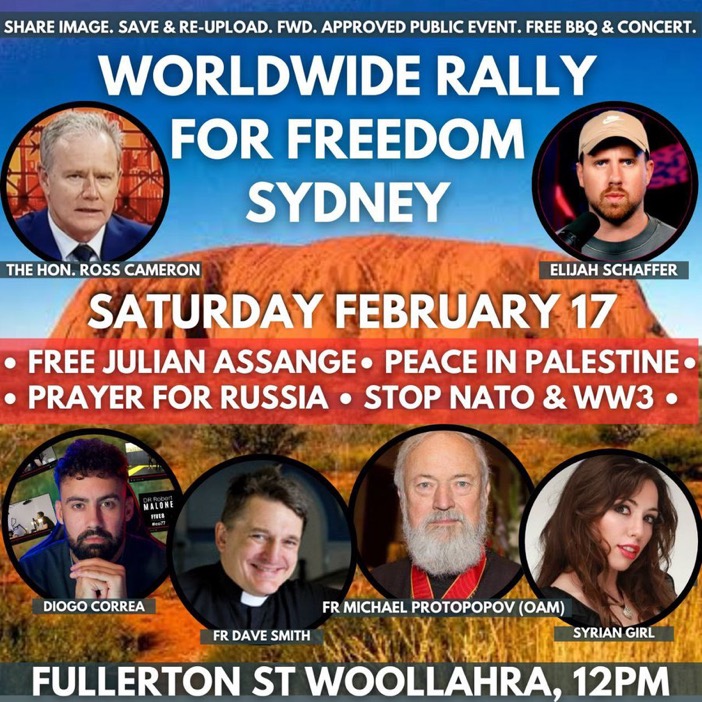
Father Dave speaking at a rally in Woollahra, Sydney on February 17th, 2024.
A big thank you to Darren Walton for putting this article together and publishing it through the Australian Associated Press on December 21st, 2023. This article went around the country and around the world. See, for example, The Guardian’s version of it, here. The AAP version though included original photos.
It was a tough fight, but one I had to have. The result was a loss via a split decision. I was upset with the decision but was heartened when I found out that my opponent was a good deal more experienced than I’d been led to believe. I’d been told he’d had a series of amateur ‘corporate’ fights. What I hadn’t been told was that he’d also had 27 professional fights in Argentina before coming to this country. That made me feel a little better.
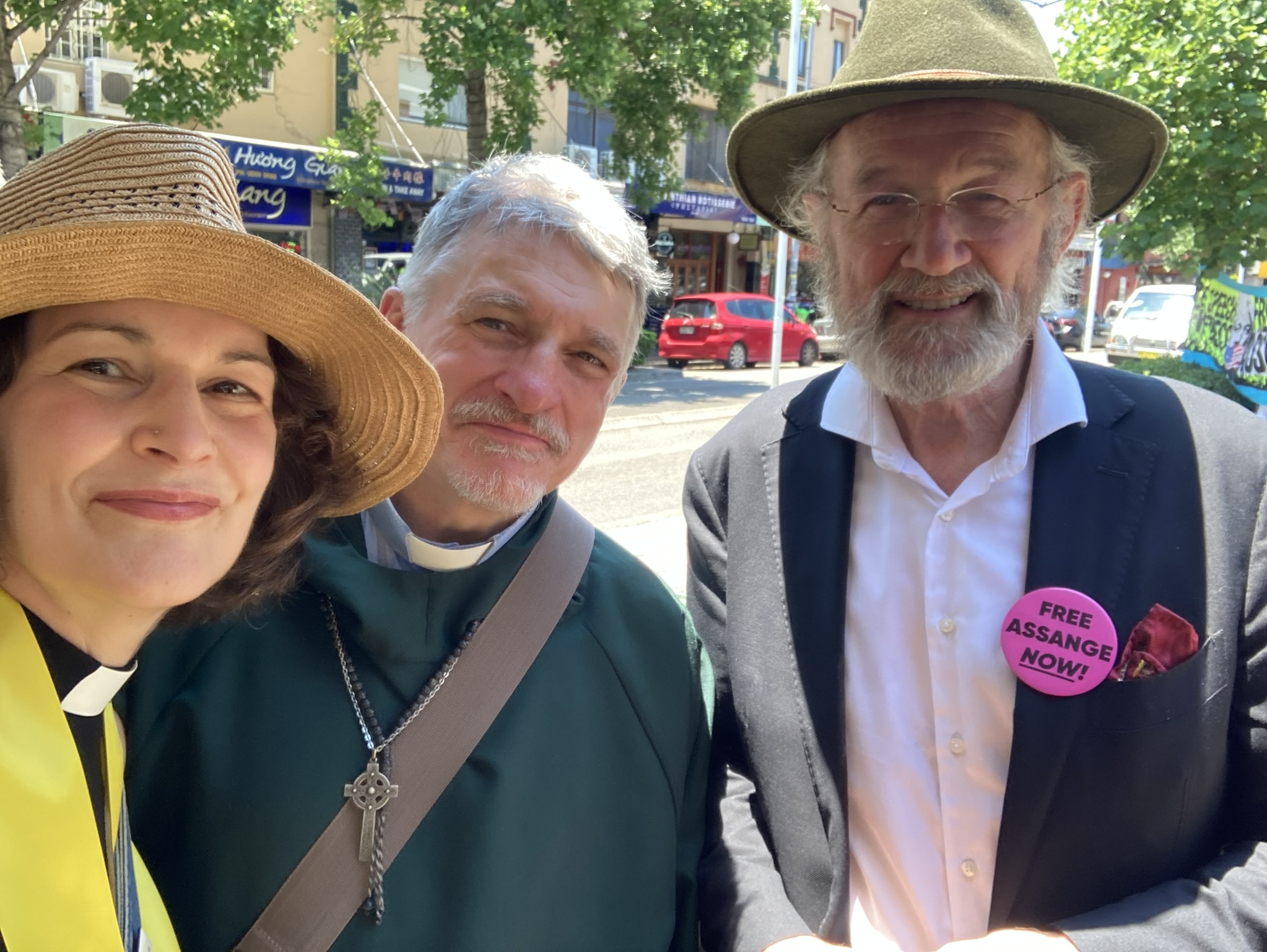
As I said in my opening words, it was great to be there and see such a good turnout. Even so, it was painful to be there when, yet again, nothing seems to have moved forward for Julian since we last met. Even so, I do believe his freedom is imminent.
I included three of the addresses given at the rally in my video compilation above:
mine, which came at the beginning of the rally
John’s (Julian’s father), which came in the middle, and
Tom Toby’s, with which we closed.
Thank you to everybody who endured the heatwave to be there. God willing, next time gather together it will not be to protest but to celebrate Julian’s release.
Dave: Okay, Father Dave here with Father Mark I’ve, just come back from England and Mark, is from England, and we’re in Sydney, and we’re talking about Palestine, That’s about it, isn’t it? Or Israel and Palestine, which at the moment, is as desperate a situation, I think, as it has been within my lifetime, Would that be correct? No, I guess … It probably would be correct. I mean we had the, I suppose the …
Mark: We’ve had the Intifadas and the previous wars and yeah and so on, but this seems to have escalated past all of those People are now starting to talk in terms of it having world implications.
Dave: Well, this is it I mean … It seems to me we’re looking potentially here at World War III. I think I’m going to find that tweet again, which I shared this morning, which I shared on Twitter and Facebook from a guy called Alexander Dugan who is a professor of some sort. I just thought it was very well put.
“In these days and after…” Sorry
“In these tragic days and after cruel bombing by Israel of a Palestinian Hospital in Gaza, the final loss of American control over the Islamic world is total and irreversible. Now the globalists have to fight simultaneously Russia, China and World Islam If that is not World War, III ..” Is there anything more than the ..,? Oh, “If it’s not World War III, what the hell is it?”, he says, and I thought that really encapsulated the situation.
Mark: Yes, it does, but I think we’re possibly a few steps still away from it, and by that I mean that what’s happening right now in in Israel/Palestine – it’s political, It’s not about individual people or indeed, the difference between Jewish, Christian or Muslim faiths. They’re easy. It’s easy for us to to label things in that way but the truth is that for a very long time the politics has been influencing enormously what’s happening in that part of the world and if you …
It’s very hard to be a Christian on occasions because we believe that Jesus Christ is at the centre of every human being. We believe that the Holy Spirit, works in the world, and we believe that it works for peace and for good, and there are undoubtedly billions and billions of acts of kindness and generosity and hope going on all the time but that’s not where the politicians seem to want to see the world.
Now what do I mean by that? The truth is that there has been oppression and occupation of Palestinians for, you know, well, we could say the last 75 years since Al Nakba, but you know, prior to that, and possibly not immediately prior, but for thousands of years, Jewish and Muslim people lived perfectly happily together in the in the land, that is now Israel/Palestine.
It was called Palestine at that time and then the politicians from Britain got involved, and from France, and the segregation and things of like that happened, and then there was a political guilt in the world and, to a certain degree, a Christian guilt, around the Holocaust. And how do we rectify what happened to the Jews in the Holocaust because that was the greatest event of catastrophe and murder that the world has ever really seen in recorded history? And so, in a sense, like everything, the pendulum never seems, to stop in the middle? It swings from one way to the other.
Israel were given this piece of land but with very clear instructions on how to manage it, and the responsibilities they had towards the indigenous Palestinians, and so on, but because of the guilt, the politicians have never enforced any of those conditions, and Israel, perhaps understandably (and I say ‘Israel’ in terms of again politicians and leaders, not average everyday person on the street), perhaps understandably, decided that this must never happen again, and the only way to do that was to create an environment in which it couldn’t happen again, and that meant to eradicate anybody who wasn’t Jewish Israeli from that part of the land, and that’s where the Nakba came from. It was the reduction, you know, the removal of 750,000 Palestinians from their homes, their lands, their businesses, and it’s been going on ever since. The Nakba was a not a one-off event. It’s a 75-year event.
So, if you see things in those historical terms, you start to see why it is that Israel gets the political support it does now, and why it feels inviolate when it comes to whatever actions they want to take. They are going to find international support rather than International condemnation.
Dave: Yeah, look, I always remember Uri Avnery’s illustration, the great late great Jewish peace activist He used to say it was likea man jumping from a burning building. He had to jump, but he landed on some innocent guy on the side path. When he jumped. You know, the Jewish people needed a place of safety, particularly after the Holocaust – absolutely – but they landed on the Palestinians, and it wasn’t their fault,
Mark: No, but the actions as a consequence of that are very much the responsibility of the government of Israel, which has moved evermore extremism in its right-wing views and its work, so you you’re starting from that point, and then you see,
Dave: it’s been encouraged and bolstered and supported by the US and that’s why …
Mark: Britain caused it and America keeps it going. But, you know, the truth is the US needs a strong, militarily strong, Israel to keep all these horrible Arabs and Muslims in place in the way that they see it because there’s oil considerations, there’s power bases there, but even.
Taking that aside, what Hamas did and, you know, what Hamas have done is to use young men, full of testosterone, who have grown up, been born and grown in total occupation – never known freedom. They’ve seen their parents, grandparents their siblings, get poorly, not allowed out through the gates, not getting visas to get treatment, … dying They’ve lived without the freedom that we take for granted, and then along comes Hamas with promises of revenge and freedom, and when you’re testosterone-filled and you’ve been told that you’re going to be a martyr, and, you know, what you’re doing is legitimate in the sight of God because of what’s happened for over … and away they go.
The truth is this is when I said it’s hard to be, a Christian. We cannot condone violence of any kind, it doesn’t matter if I can understand those frustrations and I can understand the fears. Being a Christian says, no violence, never, ever brings a resolution, It may be short-term resolutions but it will never be long term, and peace is the only, and we’ve often said, those of us who support Israel Palestine, there’ll never be peace for Israel unless they find peace with Palestinians first, and I feel that this has now set us back.
We were at a point where people were starting to talk about – in in senior positions within governments around the world, they were starting to talk and use the word ‘apartheid’, because the Israeli state is an apartheid state. There’s no question of that now. People like Desmond, Tutu identified it. The church in South Africa has come out and acknowledged it, and if those people don’t know what apartheid is ..
Dave: Jimmy Carter, I think, as well, in the US in his book …
Mark: Ah …, yes, well, indeed and there are many other very clever and erudite people around the world who have seen it in this way, and that was starting to gain traction, which meant, ultimately, in a period of time. political pressure would start to come on to the state of Israel, to say to the government, ‘You know,you can’t continue down this road. You have to find a way of making peace’.
We all know the two-state Solution is now dead in the water. It’s, not possible, but that doesn’t mean to say there can’t be peace of some kind or another. And what Hamas have done has now put this back decades probably, because we’re going to have to go back to the starting point of saying to, you know, that what Israel has done in the past will now have been wiped clean from everybody’s memories and it’s almost starting again, you know, and you, Dave, have had, your own experiences. I’ve had my ..
The very first time I went to Yad Vashem, I was leading a group of Christian pilgrims, and I had my collar on, and I walked into Yad Vashem with them and they’re all there for the first time, and there was a great big banner by the door that said, “Never trust these Christians; They still believe … they still blame us for killing their Jesus’‘ – at the opening, entrance to Yad Vashem! And that level of fear in Jews in Israel is, no doubt whatsoever, is underpinning a lot of the things that have happened, and you have to pray for that fear to go, you know: Christians don’t blame Jews for killing their Jesus. .
Dave: Well, look, let’s be honest though. I mean some have. I mean, even great figures like Martin Luther. We’ve had a terrible history of anti-Semitism within the church – no doubt about that, and no doubt there’s some of it still around.
Mark: I don’t hear it on a regular basis. In fact, it’s the old pendulum again. Now, you’re, so careful, not to say anything that could be classed as antisemitic that you daren’t even feel that you can challenge things that are, you know, against the teachings of Jesus
Dave: Yeah. The problem is equating criticism of the actions of the Israeli government, with anti-Semitism, and that’s where we want to say, ‘surely the two have to be separate. things’. You must be able to criticize an action of a government without being seen as being racially prejudiced.
Mark: And that’s why the definition of the IHRA definition, which has been adopted by governments around the world, is so problematic.
Dave: I appreciate what they’re saying is that people use criticism of Israel as a mask for their antisemitism. No doubt that’s been done, but there has to be legitimate political discourse as well which … outside of that.
Now you mentioned, as Christians, we need to look for a peaceful solution. This is one of the distressing things. I read, particularly American politicians, who supposedly are coming from a Christian perspective. I mean that the level of violence, they’re advocating is, just mindless They’re, talking about, they seem to be advocating genocide of the entire Palestinian people,
It’s deeply disturbing, and we included, well, I think I quoted in … last week, Nikki Haley, who’s a presidential candidate, you know, and some of her rhetoric, but other Senators over there … the language is vile It’s as if they’re advocating a genocide of the Palestinian population,
Mark: But the government of Israel has been advocating the genocide of the Palestinian population for a very long time, The …and I’m talking about the current members of the current government, because it’s moved to the right. The people who, you know, you’ve got people in charge of the police who’ve got 51, I think it is, criminal convictions, You’ve got, you’ve, got people who have very, very extreme views around genocide and they are in positions of power.
I had two examples. One was a … I spent time with a young Jewish teacher, Obviously I’m not going to say her name, but she was being encouraged to teach her children, around the 10 and12 year olds, that Arab children were less than human and therefore didn’t need to be seen as human or treated as human. She left the teaching profession because of that.
I’ve spent time, as I’m sure Dave has, and others listening to people in ‘Breaking, the Silence’ and other organizations. Where people who have spent time as in their doing their national service in Israel, who have come away with the most horrendous stories of how they, are taught that to eradicate Palestinians as a perfectly legitimate aim for Jewish people or for the state of Israel, not for Jewish people, my apologies, for the state of Israel. My own view is that the average Jewish person and the average Palestinian person are horrified by what’s going on.
I’ve got some close Jewish friends there, as I know Dave has. We have some close Palestinian friends. I had an email this morning from one saying “My heart is broken into a million, a billion pieces because of the bombing of the hospital in Gaza’‘, and, you know, the request by Israel, for people to move South, and then bombing the only two safe routes that were supposed to be used, and so on,
But in all of this, the one thing we have to hope on is that Christ will eventually conquer all of this because there’s an old saying that, “It will be all right in the end. Well, if it’s not all right, then it’s not the end”, and whether you’re a Zionist and believing that particular, you know, the world will be right when. Christ comes again, or whatever you believe in. The truth is, as a Christian, it’s hard to be a Christian in these times because you’re human side of you wants to cry out for revenge in some case for all the horrors of both sides, but the truth is, as Christians, If we don’t start, or we don’t continue to be messengers and beacons for peace, then who will? If not us, who will?
Christians need to be able to move above all of the politics and all of the violence and all of the hatred. Engage with it, discuss it, share it. I’m involved in putting a conference together next year where we’re going to be talking about anti-Semitism and anti … anti-Christianism, believe it or not, as a result of …
Dave: I didn’t think that was a word
Mark: Well, neither did I..I think we might have made it up, but nevertheless, it’s a result of things that have been happening in Jerusalem, and also islamophobia. And this conference is designed to acknowledge and to work on why it is all of us at times have those feelings and every human being gets those feelings on occasions because they look out at the world and see these things happening, but as Christians we have a God-given duty to talk about the peace that must come and how we can help shape it in our local communities.
We need to talk about peace, not about revenge, not about the violence. We need to preach peace because out of peace comes hope, and out of hope comes joy, and that’s what God wants for his creation – hope. peace, joy. That’s what we want, and even though this is all going on over there, we’re praying like crazy and we’re doing everything we can if the opportunity arises to engage with it.
As Christians, we have a duty to talk about and preach peace, So in our churches, in our families, in our communities, wherever it might be, if this subject comes up, I encourage everybody not to take sides – to preach peace for both – because if God is in all the world and if God’s in every part of the world, then even in the horrors of Israel-Palestine God’s there in the heart of It hoping to bring some kind of peace through any and everybody he can work through.
And. It doesn’t matter if you’re, Christian, Jewish Muslim, whatever. The truth is that we all go back to one God who created us for peace.
Dave: I think you said it all brother We’ll keep praying and keep doing what we can.
……………..
Father Mark Battison is the current president of Friends of Sabeel, Australia– a Christian Palestinian human rights organisation.
I think we’ve all been shocked by the recent events in Israel and Palestine. Hamas made a well-coordinated military assault on Israel by both land and air that apparently took the Israeli military completely by surprise. Hundreds of people were killed, prisoners were taken, and the whole region has been thrown into turmoil.
I don’t think any of us in the Fighting Fathers community could celebrate the Hamas’ attack. Civilians have been killed and hostages taken. There’s already been a terrible loss of human life, and I’m no fan of Hamas. I’ve seen firsthand some of the things done, if not by them directly, by their parent organisation, The Muslim Brotherhood. I do not support Hamas and I do not support this kind of violence in any way. Having said that, I equally cannot support the sort of retaliation that is being talked about, both within Israel and by Israel’s supporters around the world – a retaliation that Benjamin Netanyahu has promised“will be remembered for decades to come”.
There is a lot being said about this conflict at the moment, and I appreciate that it can all be a bit confusing. I want to say just two relatively straightforward things that I think need to be said. Then I’ll leave it to you to think it through further as you pray for Israel and for Palestine and for our fragile and fracturing world.
The first thing I want to say is that this eruption of violence coming out of Gaza should not have surprised us. Of course, in its timing and in its military success, it has surprised everybody, but that the Palestinians of Gaza should rise up and fight should not surprise us. Indeed, at one level, this is just another round in a long fight, and this despite the fact that US President Joe Biden refered to the Hamas attack as ‘unprovoked’. That really should have picked him up by the fact-checkers because the attack was certainly not unprovoked. Indeed, this attack is part of an ongoing fight has been being waged for nearly a hundred years, and has already claimed tens of thousands of lives, and displaced millions of people.
It all goes back to1917 when the Brits issued the ‘Balfour Declaration’ – a letter written by then Foreign Secretary, Arthur Balfour, committing the British government to “the establishment in Palestine of a national home for the Jewish people.” This led to a massive migration of people into Palestine between 1923 and 1948 – a land where, up to that point, 90% of the population had been Palestinian Arabs.
This influx of immigrants eventually led to the first Arab revolt, which lasted from 1936 to 1939, when it was crushed by a combined army of 20,000 British troops and 15,000 immigrant Jewish settlers. 5,000 Palestinians were killed, and three to four times that many were wounded. These were the early rounds of the fight, taking place while the British still had colonial control of the country.
By 1947, the immigrant Jewish population had grown to comprise a third of the population of Palestine though they only owned about six percent of the land. This led the United Nations to adopted ‘Resolution 181’, calling for the establishment of an official Jewish state, comprising a little less than fifty percent of the land. The Palestinians rejected the plan, of course, because they didn’t want to give away that much land, which included most of the fertile coastal region. In response, the immigrant leaders took matters into their own hands and started a military operation to evict Palestinians from their homes and to take control – an operation that has since been referred to by the Palestinians as ‘al nakba’ (meaning ‘the catastrophe’).
As a result of al nakba, around 15,000 Palestinians were killed, as many as 750,000 were forced out of their homes, and seventy-eight percent of historic Palestine was captured. On May 15, 1948, Israel announced its statehood, and the neighbouring Arab states responded by declaring war on the new state. The first Arab-Israeli war ended six months later with an armistice signed between Israel with Egypt, Lebanon, Jordan and Syria,
At that point there were still around 150,000 Palestinians living in the new state of Israel, with others living on the West Bank of the Jordan (subsequently known as the ‘West Bank’) and in Gaza, but things degenerated further after the war of 1967, where Israel again fought against all its Arab neighbours. After decisively winning, Israel took control of areas in both Lebanon and Syria, along with the Palestinian settlements. This was, formally, the start of the militaryoccupation of Palestine.
Since 1967, the violence has, for the most part, been less overt. What we’ve seen over those years, and continue to see, is a process whereby the Israeli government builds settlements of Jewish-only communities in the West Bank, often evicting Palestinian families from their homes to make way for their new residents. This process has been unrelenting, despite repeated international appeals to halt these developments.
Of course, the Palestinians have not just quietly acquiesced to the theft of their land and the loss of their homes. There have been ongoing, endless, peaceful protests, as well as multiple violent attacks on military and civilian targets. There have also been two major ‘intifada’ (‘uprisings’) – the first going from 1987 to 1993 and the second (far bloodier) uprising going from 2000 to 2005.
Since the suppression of the second Intifada, we’ve seen Israel build an enormous wall around the Palestinian areas in the West Bank that has been successful in reducing terrorist attacks in Israel, though at enormous cost to the Palestinians living inside those walled-off areas, and in 2007 the Israelis (with the help of Egypt) completely sealed off Gaza from the rest of the world – walling the people of Gaza into what has been described as ‘the world’s largest open-air prison’. Israel has complete control over who and what comes in and out of Gaza, which has allowed them now to cut off all fuel supplies, electricity, food and water.
This is obviously a very superficial history of the conflict between Israel and Palestine, and if you read the official statement by Ismail Haniyeh, head of Hamas, you’ll find that he lists a whole series of other grievances that he believes justify the recent military assault. As well as the settlements and the Gaza blockade, Haniyeh speaks of the 6,000 Palestinian prisoners in Israeli prisons, and the recent actions of Jewish settlers ‘defiling’ the Al-Aqsa Mosque – an action that was bound to mobilise Palestinian Muslims against the Israeli government.
Now, as I say, I don’t like Hamas and I don’t like Ismail Haniyeh, and I’m not suggesting that any of these actions or the terrible history of pain between Israel and the Palestinian people justifies this latest surge in violence. Even so, I am saying that this attack was not ‘unprovoked’. It’s another round in a long history of violence.
That is the first thing I want to say – that this is just another round in a long fight. The second very important thing that needs to be said is that this is not just another round in this long fight, in that sense that there are some very unique aspects to this latest round of violence that should be of particular concern to all of us.
One unique aspect to this latest round of violence, of course, is that it’s the first time in a long time that anyone representing Palestine has had any real military success, which is why many Palestinians will inevitably see this as a cause for celebration. More concerning though, from my perspective, is the timing of this assault in terms of current regional and global power dynamics, as I believe this conflict has the potential to escalate rapidly, and could engulf the whole world.
Hamas have called on al Muslims around the world to support this latest Palestinian military operation, and this call is well-timed. Despite the fact that opposition to the Palestinian Occupation is almost an article of faith for Muslim people worldwide, in recent months we’ve seen a series of Middle-Eastern countries normalise relations with Israel. Both Bahrain and the United Arab Emirates (UAE) have done this, and pressure has been put on Saudi Arabia by the US to follow suit. Interestingly, I read only today that the Saudi Crown Prince, Mohammed bin Salman, (known as ‘MBS’) has publicly expressed his support for Palestine, which more or less scuttles any prospect of the Saudis normalising relations with Israel. This is a major political win for Hamas and for Palestine, and I suspect that it may have been one of Hamas’ key strategic goals in launching their military assault when they did.
Of course, Saudi Arabia is not likely to be alone in the Arab world in showing support for Palestine in this uprising. Indeed, Lebanon-based Hezbollah has already fired rockets into the Israeli-occupied Shebaa Farms in support of the uprising, which is particularly significant, I think, because Hezbollah is a Shia organisation that normally would have nothing to do with Hamas, who, as I say, are a branch of the Muslim Brotherhood. These two do not normally get on, despite having a common enemy, yet it may be that a ‘3rd Intifada’ could see the two working together.
What will Syria do, I wonder? If they were in a better state, militarily, I suspect that Syria might take this opportunity to retake the Golan Heights, which is sovereign Syrian territory, occupied by Israel ever since the war of 1967. There has never been a peace treaty signed between Israel and Syria since that time, and Israel has indeed been bombing Syria continuously over the last ten years, so there will be little sympathy for Israel coming from Syria at the moment, nor, I expect, will there be from many of Israel’s Arab neighbours. The question is, if some of those Arab neighbours do get militarily involved in this struggle on behalf of Palestine, would this draw the big international players further into the conflict, initiating a third world war?
Certainly, the rhetoric of the some of America’s political leaders suggests that they are more than ready for a global ocnflict. Current US Presidential candidate and former UN Ambassador, Nikki Haley, said, “The fanatic Hamas terrorist group must be destroyed. But Hamas is only a small symptom of a larger disease… Iran, Russia, and China are in league together, attacking Americans, American allies, and American values. This is a battle between the civilized world and barbarians. America must stand up for our citizens, our values, and our friends.”
Yeah. ☹
I did hear via a Jewish friend in Israel that evangelical Christians there were saying to her, “Don’t worry. This is just the beginning of Armageddon.” If they are referring to prophecies of the end times, I think they give us every reason to be worried. Moreover, a global conflagration that could potentially could kill millions and millions of people is in no way something that any sane person should support.
We are not there yet, and we don’t have to get there, but the way to pull back from this potential Armageddon is not by further escalating the violence. The way forward, and the only way forward in my view, is for Israel to accept what the BDS movement (Boycott, Divestment, Sanctions) has been calling for since 2005. Namely:
An end to the military occupation of Palestine
Equal rights for Arabs in Israel
The right of return for Palestinian refugees.
You’ll notice that this list, which has been agreed to by representatives of every section of Palestinian society, doesn’t even mention an independent Palestinian state. These goals are not impossible to achieve. We can do this. We should do this. For the sake of Israel and Palestine, and for the sake of all humanity, we need to do this.
Pray with me, please. Pray that peace will come, and come quickly, but pray that with peace comes justice – the only thing that can make for lasting peace – a justice that entails the end of the Occupation, equal rights for all, and the right of return.
May the blessing of God Almighty – Father, son and Holy Spirit – be amongst us and remain with us always. Amen.
A big thank you to Steve Wellings and my other mates at The Boxing Asylum in the UK who turned my interview with them into a video documentary. In my view it’s one of the best documentaries on my work to date!
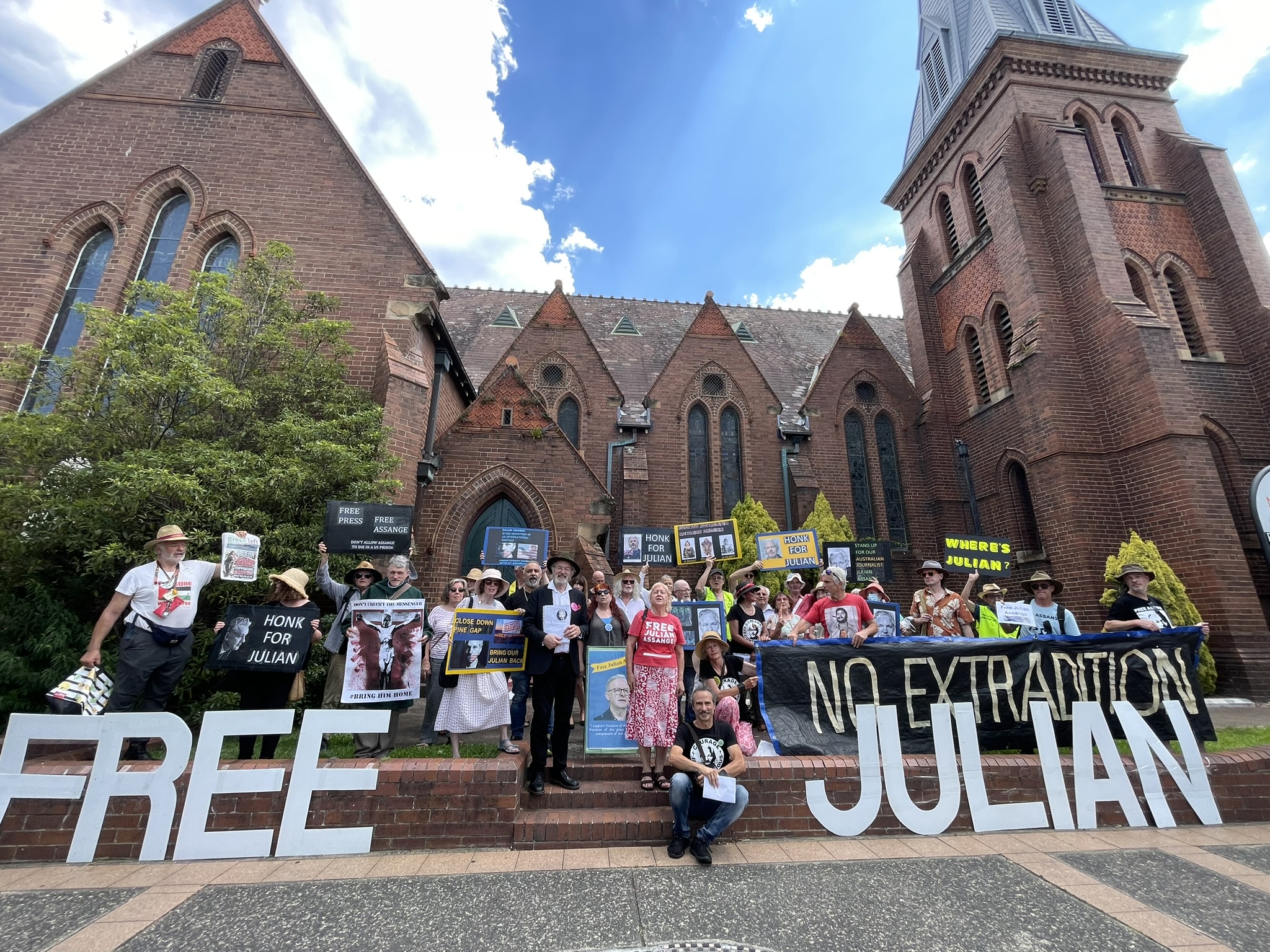













Free Julian Assange Now – the Webinar
It was a great privilege for Fighting Fathers Forums to host a Free Julian Assange Now webinar on Monday, December 18, featuring:
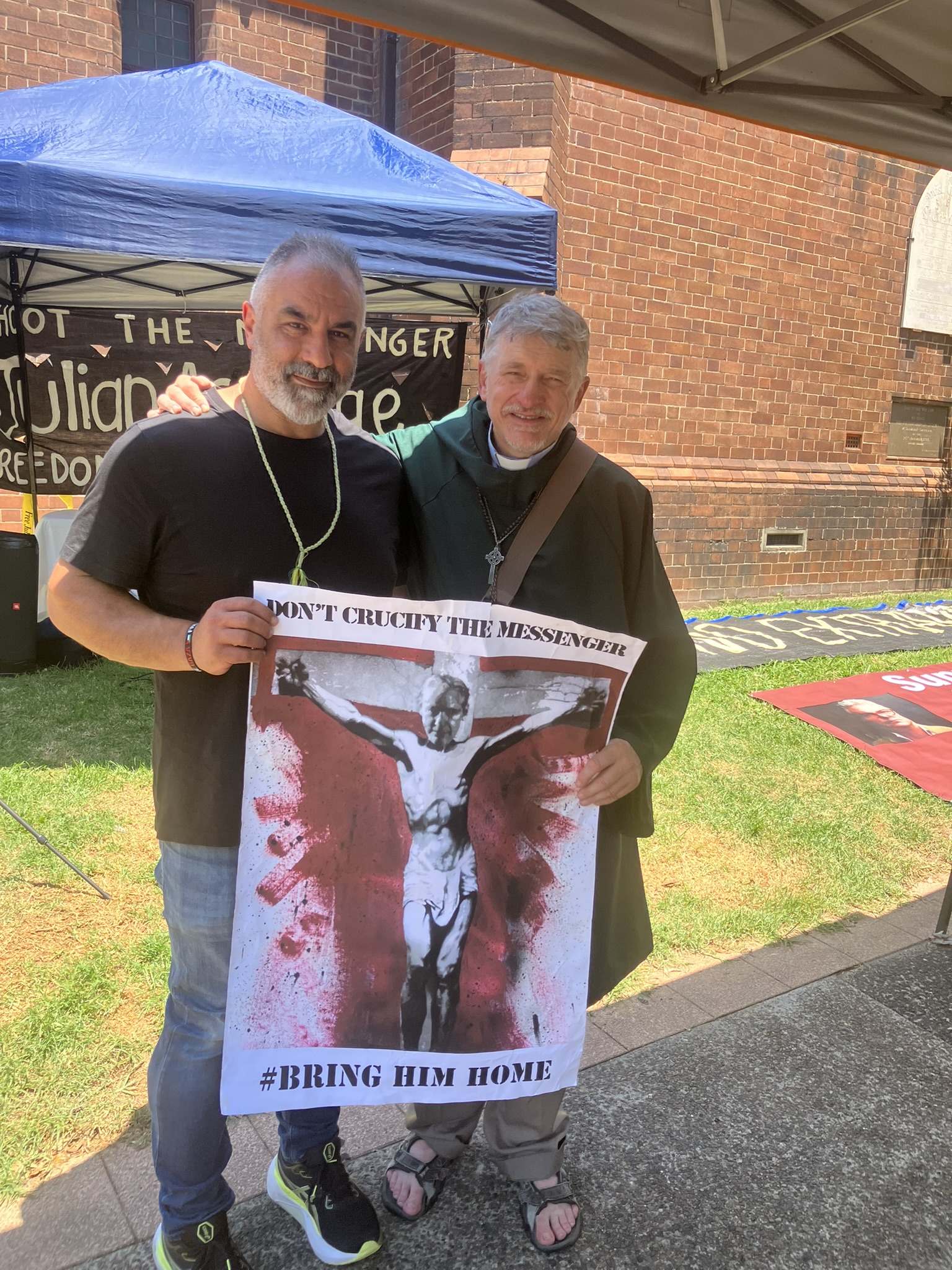
#bringhimhome #freejulianassange #pressfreedom #freewebinar